Westwood's mountains - the Five Sisters bing

Return to the Burnhouse to Westwood path
The Five Sisters are unlike any other shale bing in Scotland, and have been created within the span of living memory.
Crude oil was first produced at Westwood oil works during the dark days of world war two. The new works were a break from tradition, with new forms of equipment and mechanisation that produced oil more efficiently than ever before, and with less labour. The new style of retorts produced a finer and more evenly sized spent shale than traditional equipment, and this waste was heaped using a mechanised trolley and hopper arrangement that tipped automatically at the top of the bing. Over the first decade of operation, the spent shale was tipped to form two large conical bings, set at about 60 degrees to each other. Trolley rails were then moved to create futher tip points between these two outer wings. When the works closed in 1962, four large bings, and a smaller fifth one, had been formed, with plenty of tip space remaining between them if production had continued.
Find out more about Westwood oil works and the story "The Five Sisters".
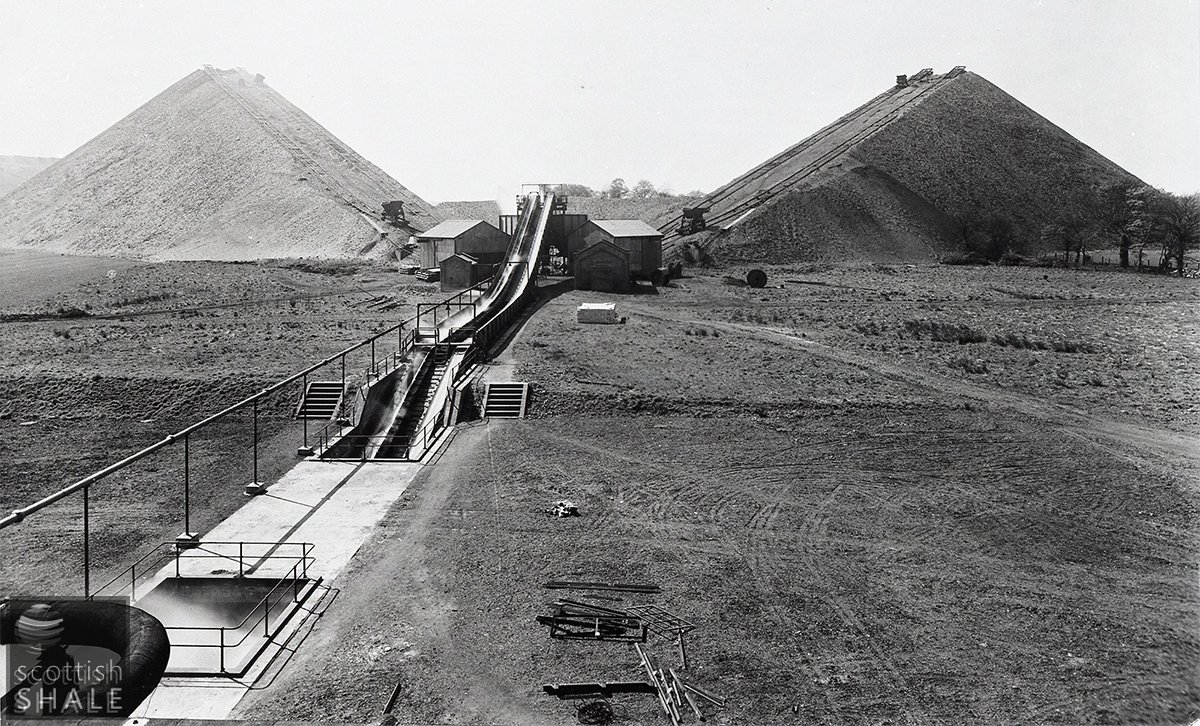
In this view, from about 1950, only the outer "sisters" had been formed. It clearly shows the conveyor belt and rail-mounted hoppers that were used. See full record: LVSAV2019.120
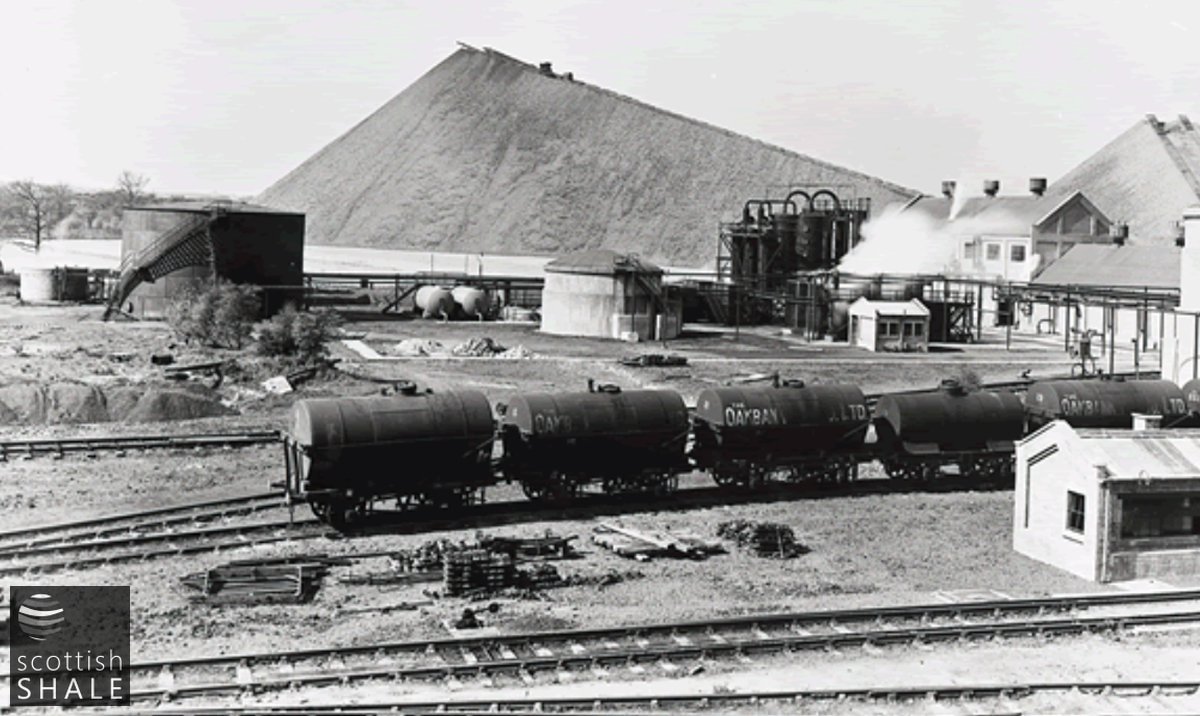
The southern sister c.1950. See full record: LVSAV2019.119
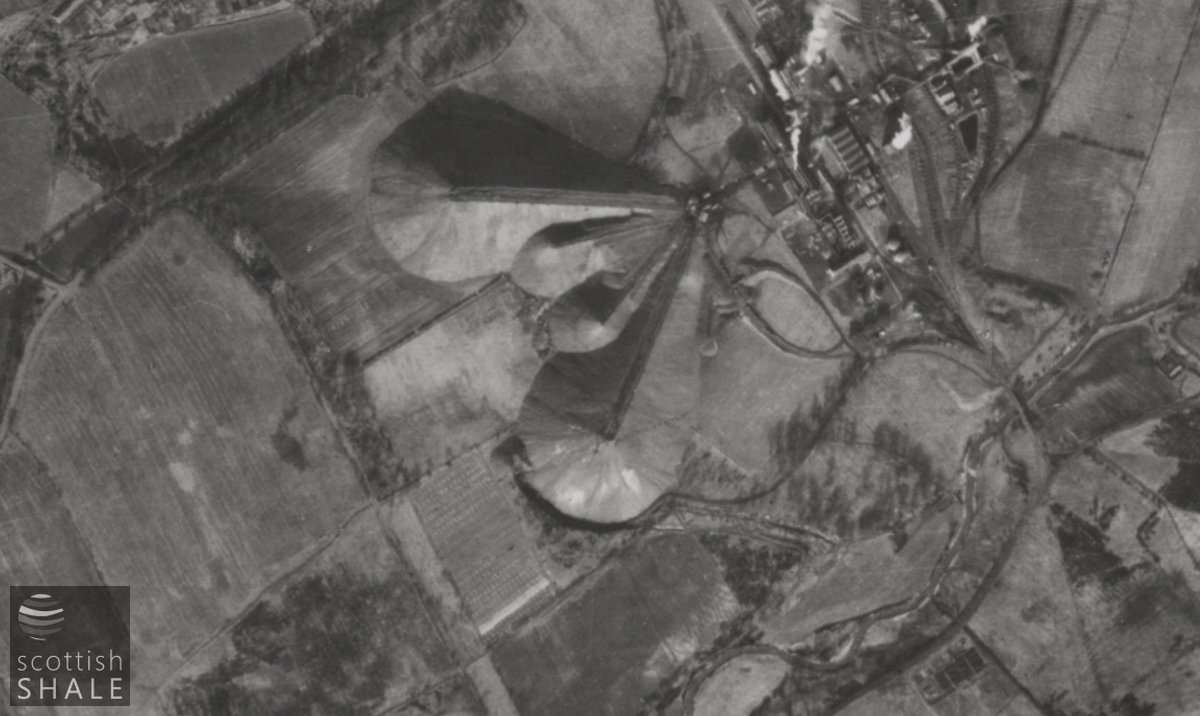
Aerial view from the early 1950's courtesy National Library of Scotland

Recent LIDAR image show